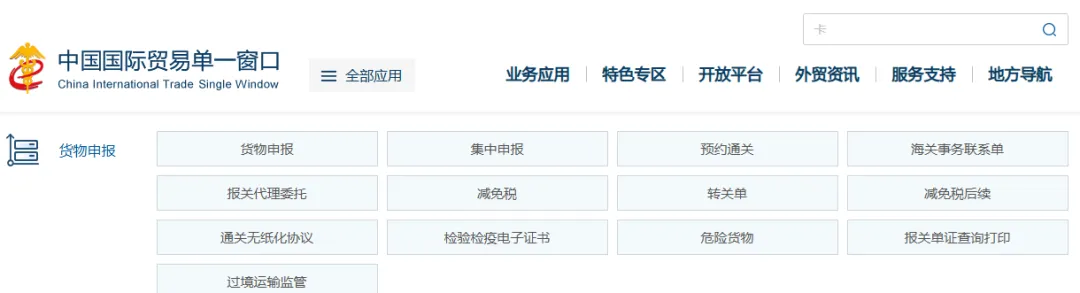
Analysis of New Regulations on the Single Window Power of Attorney Agreement
- The official launch of the Power of Attorney agreement function within the international trade “Single Window” territorial inspection system is a significant step towards enhancing customs clearance facilitation and has a profound impact on the inspection and quarantine declaration work of export agents.
Core Change: In the “Single Window” territorial inspection system, the Electronic Power of Attorney Agreement has become a mandatory prerequisite for declaration. If there is no valid online Power of Attorney agreement between the relevant enterprises, the system will not automatically issue the Electronic Ledger (except temporarily for the Export Dangerous Goods Packaging Application).
Importance of the Electronic Ledger: The Electronic Ledger is a crucial document for goods export customs declaration and clearance. Without it, goods cannot be normally declared for export. Therefore, this change directly affects whether business can proceed smoothly.
Specific Changes and Impacts on Export Agent Declaration Work
1. Fundamental Change in Pre-declaration Preparations
Past: Possibly only required collecting paper-based power of attorney letters, or ensuring correct relationship entries during declaration.
Now: It is mandatory before conducting the inspection and quarantine declaration to ensure that all relevant parties have completed the online signing of the Electronic Power of Attorney agreement on the “Single Window” platform. This task must be guided and urged by you (the agent) for your clients to complete.
2. Need to Clearly Distinguish Business Types and Sign Corresponding Agreements
You must determine which parties need to sign agreements based on the type of declaration. This is no longer a vague “having a delegation is enough” but requires precision regarding specific enterprise roles.
Scenario One: Exit Goods Inspection and Quarantine Declaration (Most Common)
● Required Agreements:
- Power of Attorney agreement between the Applicant Unit and the Consignor.
- Power of Attorney agreement between the Consignor and the Production Unit.
Example Illustration:
(1) You (Customs Broker A) act as the Applicant Unit, representing a trading company (Company B) to export a batch of goods produced by factory (Factory C).
(2) Relationship Breakdown:
Applicant Unit = Customs Broker A
Consignor = Company B
Production Unit = Factory C
(3) You need to ensure the signing of:
Customs Broker A ←→ Company B (Applicant Unit delegates to Consignor)
Company B ←→ Factory C (Consignor delegates to Production Unit)
Scenario Two: Export Dangerous Goods Packaging Declaration
● Required Agreements:
- Power of Attorney agreement between the Applicant Unit and the Packaging Manufacturer.
- Power of Attorney agreement between the Applicant Unit and the Packaging User Unit.
● Example Illustration:
(1) You (Customs Broker A) act as the Applicant Unit, declaring the packaging used for products (dangerous goods) for a chemical enterprise (Company D). The packaging is produced by Factory E and is loaded by Company D itself.
(2) Relationship Breakdown:
Applicant Unit = Customs Broker A
Packaging Manufacturer = Factory E
Packaging User Unit = Company D
(3) You need to ensure the signing of:
Customs Broker A ←→ Factory E (Applicant Unit delegates to Packaging Manufacturer)
Customs Broker A ←→ Company D (Applicant Unit delegates to Packaging User Unit)
Note: This scenario is temporarily unaffected by the new rule, but it is strongly recommended to operate according to this standard in preparation for future requirements or additional local customs regulations.
1. The Agent’s Role Shifts from “Executor” to “Coordinator” and “Reviewer”
Your work now includes crucial coordination and review aspects:
● Coordination: You need to explain the new regulations to the consignor (your direct client) and guide them on how to complete the agreement signing with their production factory on the Single Window. This may involve training your clients.
● Review: Before each declaration, you must log into the Single Window, go to the “Power of Attorney Agreement” module, and confirm that all required agreements have been signed online and are in a valid status. This should become a mandatory step in your new Standard Operating Procedure (SOP).
2. Risk Control Capability Needs Enhancement
● Clarification of Responsibility: The signing of electronic agreements makes the delegation relationship documented within the customs system, clarifying legal relationships. As an agent, you need to ensure the agreement content is accurate.
● Avoiding Business Interruption: If the Electronic Ledger cannot be generated due to unsigned agreements or signing errors, it will directly cause goods to be stranded at the port, incurring additional demurrage charges, container detention fees, etc., leading to customer complaints and financial losses. You must proactively mitigate this risk.
Action Guide for Export Agents
- Learn the Operational Procedures Immediately: Download and carefully study the chapter on “Power of Attorney Agreement” in the “Single Window” standard edition user manual. Familiarize yourself with the entire online signing process.
- Update Customer Notifications and Agreement Templates: Issue formal notifications to all existing and potential clients explaining this new regulation. You can create a simple operation guide or flowchart instructing clients (consignors) on how to sign agreements with their production factories.
- Revise Internal Work Checklists: Add an “Authorization Delegation Agreement Verification” step to your inspection declaration workflow. Before submitting a declaration, designated personnel must verify that all agreements are in place.
- Proactive Communication: For new delegation business, proactively inquire and confirm information such as “Applicant Unit,” “Consignor,” “Production Unit,” etc., upon accepting the order, and immediately initiate the process of urging agreement signing. Do not wait until just before declaration to handle it.
- Utilize Exemption Clauses (Cautiously): Currently, Export Dangerous Goods Packaging Applications are temporarily unaffected, but it’s best to follow the new rules, as policies may be updated at any time, and standardized operations can reduce the probability of errors.
In summary, this function realizes the electronification, standardization, and strong validation of delegation relationships for inspection and quarantine declarations. As an export agent, your core change is shifting from simply “handling procedures on behalf” to becoming the “coordination center and risk control center” for the entire declaration chain. Adapting to this change will help you enhance service professionalism, avoid operational risks, and ensure the smooth export of your clients’ goods.